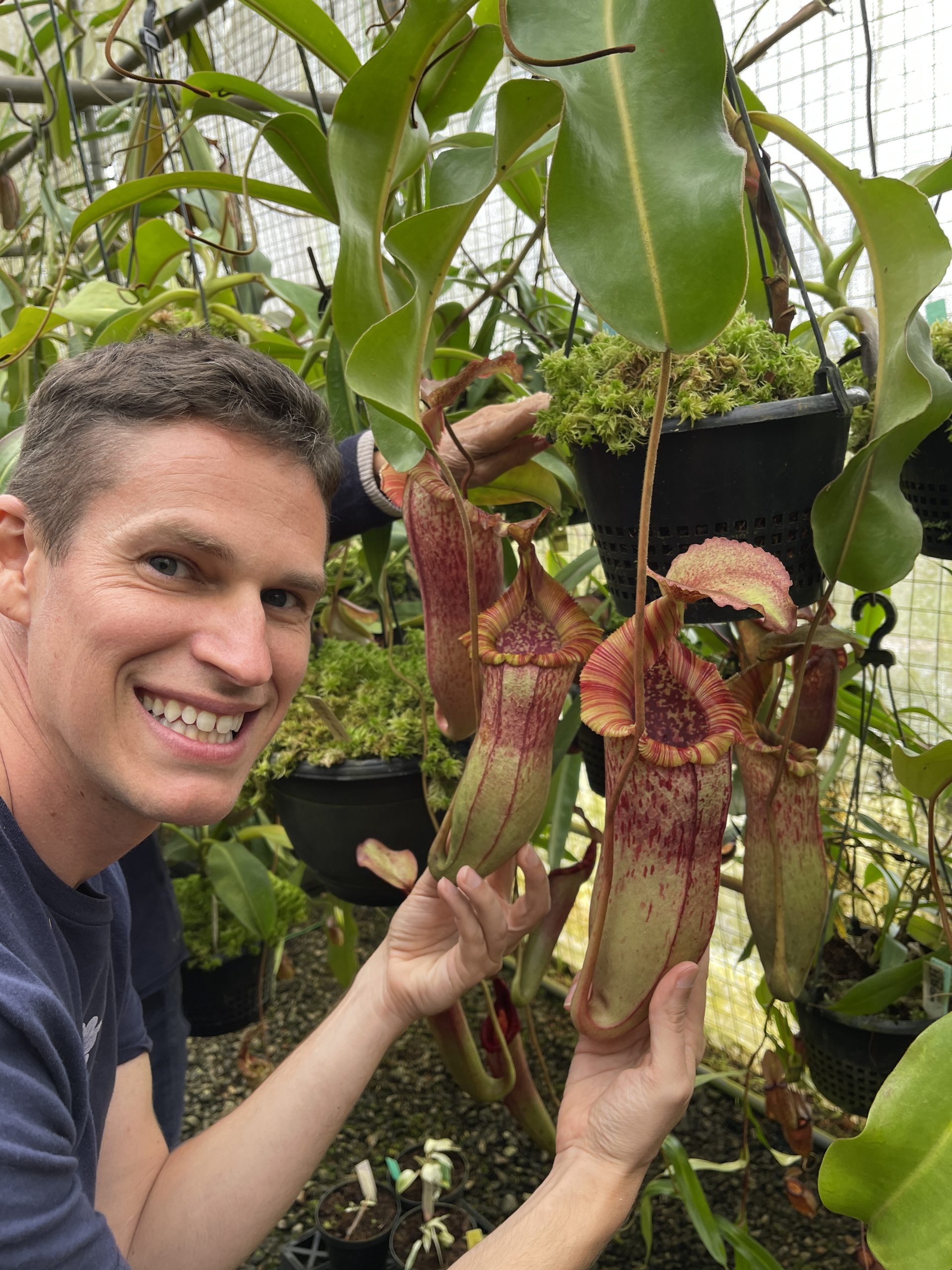
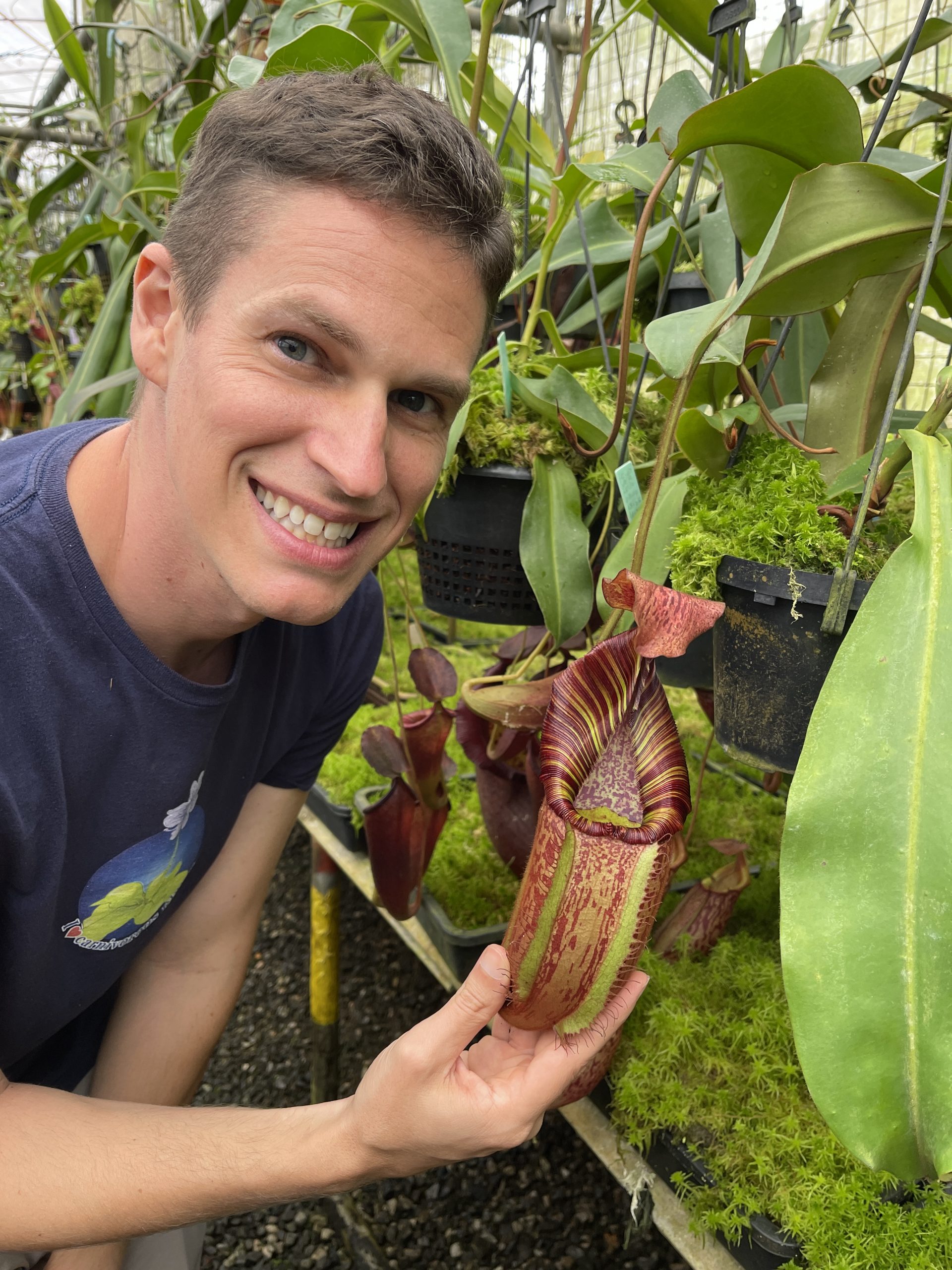
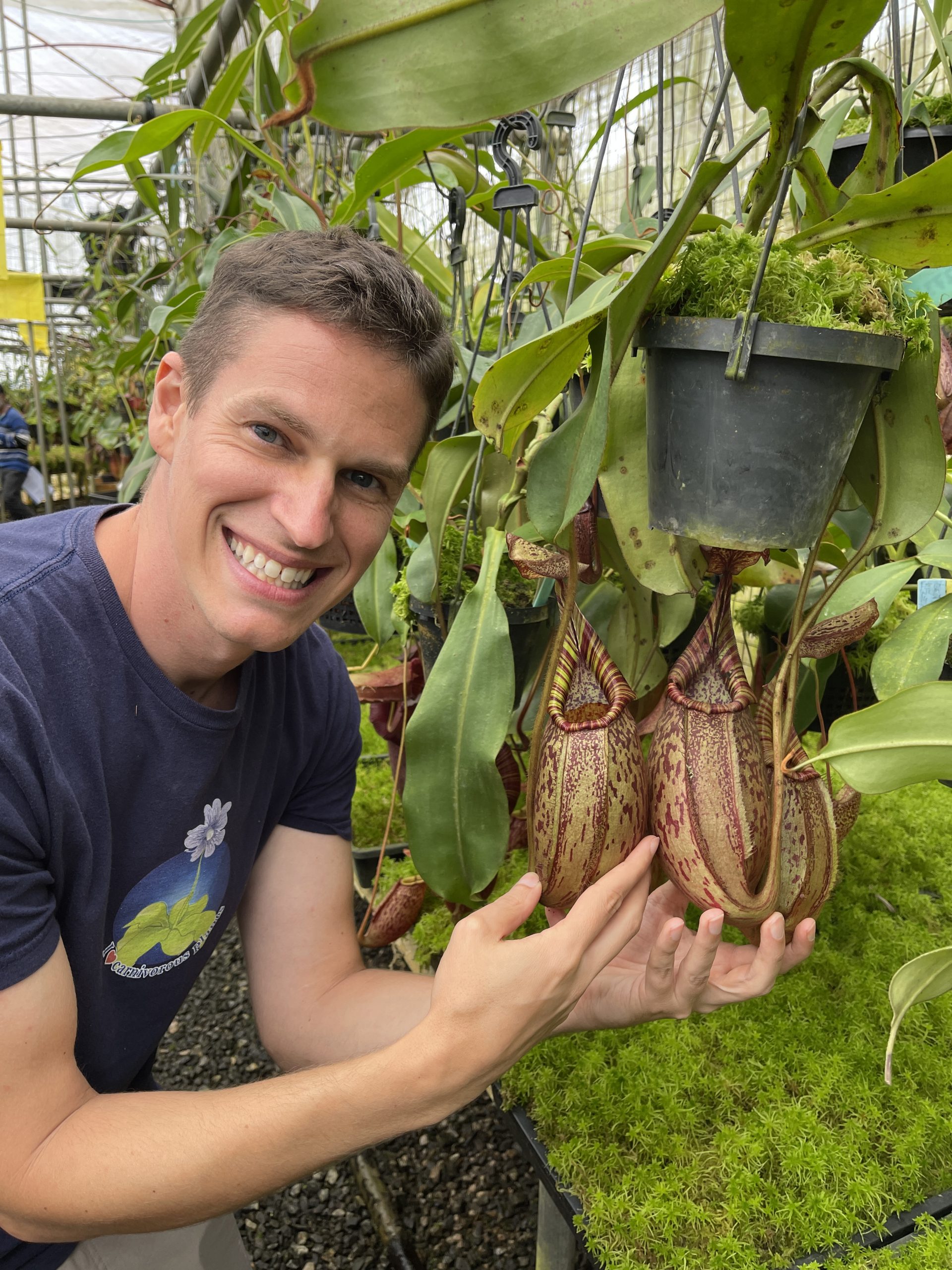
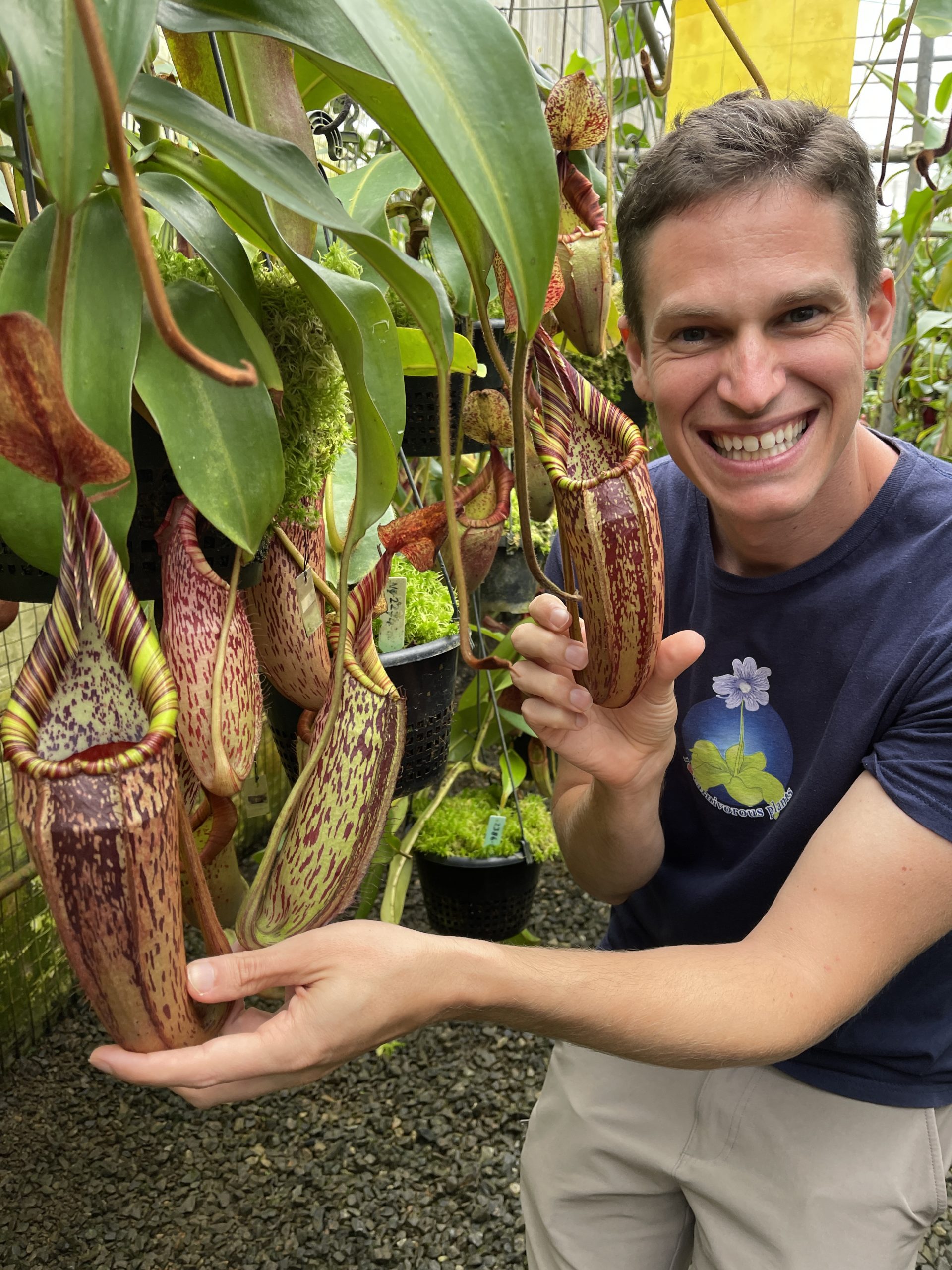
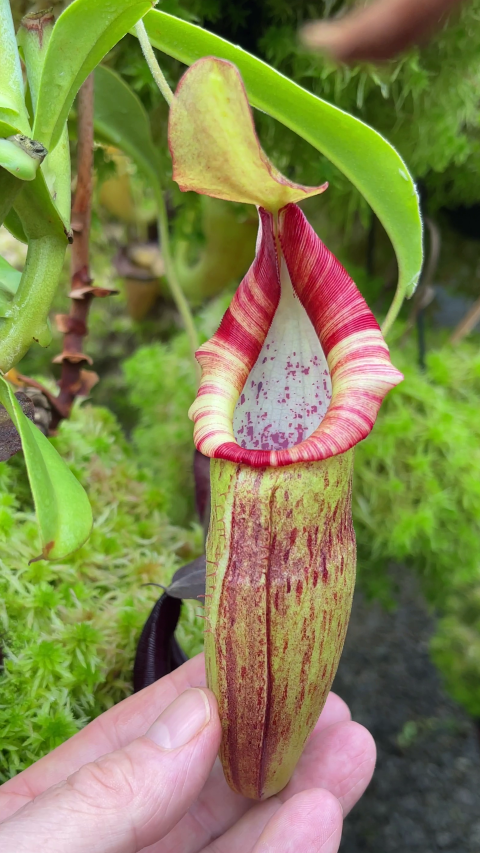
Acclimating Nepenthes
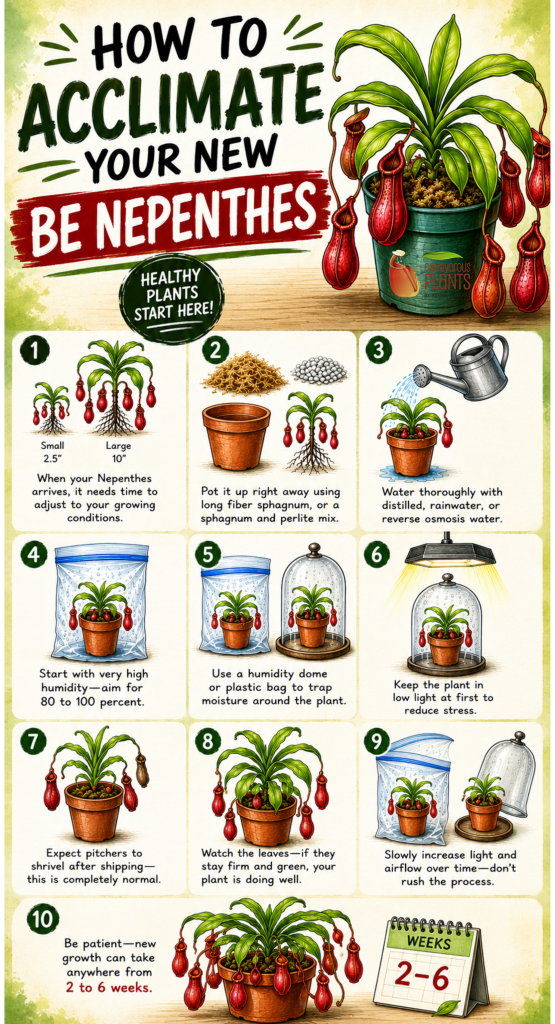
When you receive your Nepenthes from your pre-order order or from our stocked plants you will need to acclimate them to your growing conditions.
Pot them up immediately. We typically use 100% long fiber sphagnum but others have had success with 50% long fiber sphagnum and 50% perlite. Once potted up, give them a good watering with distilled, R/O, or rainwater. They should be kept in very high humidity initially. Aim for 80-100%. Placing them in a terrarium or zip lock bag is a good idea. Plants that are suspended over a shallow water level is another option, but probably will not be sufficient if the ambient humidity is low. Air flow is also important. So you’ll need to figure out how to balance high humidity with air flow. When we keep the plants, we acclimate them in our closed greenhouse, which is misted hourly. It is also important to initially keep them in low light. Every day slowly expose them to more light and lower humidity. If you are using a plastic bag, open the bag 10% a day. Pitchers typically die/shrivel up after a lengthy shipment. This is normal. Leaves should remain rigid and green. If they start to brown or become limp, do not lower the humidity and do not increase the amount of light. Losing 1-2 leaves is also normal – especially if your humidity is not high enough. Never fertilize a stressed plant.
Acclimation takes time. Plants may take 2-6 weeks before they are putting out new leaves. Check out this video I wrote to learn more.
Lowland Nepenthes Acclimation (Expanded Guide)
Lowland Nepenthes—such as Nepenthes ampullaria, N. gracilis, and N. bicalcarata—require extra attention during acclimation compared to intermediate and highland species. These plants originate from consistently warm, humid environments and must be transitioned carefully into your growing conditions.
Humidity is Critical (Start at 100%)
Lowland plants should be maintained at or near 100% humidity immediately after potting. This level of humidity should be sustained until the plant shows clear signs of recovery—specifically, the formation of a new leaf. This is a strong indication that the plant has begun producing new roots and is successfully adapting.
- For small plants: use a humidity dome
- For larger plants: place the entire potted plant inside a 2–5 gallon zip-lock bag
- Keep the enclosure sealed initially—do not open it for the first 2–3 weeks
Do Not Rush the Process
Unlike hardier Nepenthes, lowland species require a slow and controlled acclimation period.
Once a new leaf has formed:
- Begin gradually introducing airflow
- Open the bag or dome slightly (about ½ inch)
- Increase the opening incrementally every 5–7 days
- Full acclimation to ambient humidity can take 1–3 months
Lowering humidity too quickly is one of the most common causes of failure. Signs of stress or humidity that is too low often show up as limp leaves.
Temperature Requirements
Lowland Nepenthes strongly prefer warm conditions:
- Ideal range: 75°F–90°F (24°C–32°C)
- Avoid exposing them to prolonged temperatures below 70°F
Consistent warmth is just as important as humidity for successful acclimation.
Light During Acclimation
Start with low to moderate light while the plant is sealed in high humidity. Once the plant begins actively growing:
- Gradually increase light intensity
- Avoid sudden exposure to strong direct light, which can stress the plant (Don’t cook your plant in the humidity dome or plastic bag!)
About Borneo Exotics Lowland Plants
Borneo Exotics grows their lowland Nepenthes indoors under powerful grow lights. Because of this, many of these plants arrive with thicker, more resilient leaves than in the past. However, they still require a more careful and gradual acclimation process than intermediate or highland plants.
Our Method (What We Do)
When we receive fresh imports:
- Pot immediately into long fiber sphagnum
- Heavily mist the plant
- Place under a humidity dome or inside a sealed bag
- Keep under grow lights or in a greenhouse
- Leave sealed for 2–3 weeks without disturbance (but check and look in on them often!)
After this period, we begin slowly introducing airflow as described above.
Key Takeaways
- Maintain 100% humidity until new growth appears
- Be patient—acclimation takes time
- Keep temperatures warm and stable
- Reduce humidity very gradually over several months
Lowland Nepenthes are incredibly rewarding plants, but success depends on a slow, steady transition. Rushing the process will almost always lead to setbacks.